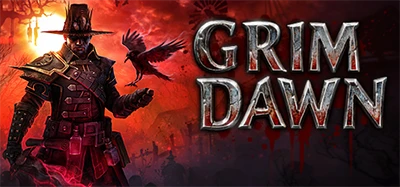
Two-Class System
Pick two, master both, and forge a build no single class could match.

The Two-Class System is the foundational character-creation and progression mechanic in Grim Dawn, the isometric action RPG developed by Crate Entertainment and published by Eleventh Game. Rather than a single fixed class, a player selects a primary class at character creation and then a secondary class at a low level threshold, unlocking access to two distinct skill trees and a blended set of base attributes. This design produces a wide matrix of hybrid builds—barbarian-warden tank, sorcerer-occultist nuke, ranger-demon-hunter glass cannon—while keeping the roster to eleven base classes.
The system sits at the heart of Grim Dawn's identity: it gives the game a depth of build variety that rivals larger-scale RPGs without requiring a sprawling class tree. Every piece of equipment, every skill point, and every crafting recipe is filtered through the lens of the two classes a player has committed to, making the early choice one of the most consequential decisions in a run.
- Developer
- Crate Entertainment
- Publisher
- Eleventh Game
- Genre
- Isometric Action RPG
- Base classes
- 11
- Primary class selection
- Character creation
- Secondary class selection
- Level 10
- Setting
- Kaitain
Lore & Background
In the shattered world of Kaitain, the return of magic after the Cataclysm did not arrive as a gentle tide. It surged through the bones of the dead, the marrow of the living, and the very stone of the land. Those who survived the first decades of this upheaval discovered that their bodies and minds had been reshaped by the forces they had channelled. A warrior who had brawled through the Ashen Wastes carried a different resonance than a scholar who had whispered incantations in the vaults of the old academies. The Two-Class System, as the citizens of Kaitain came to call it in their taverns and guild halls, was less a rulebook and more an observation: you become what you have practised, and you become it in layers.
The eleven disciplines—Barbarian, Berserker, Bloodmage, Demon Hunter, Enchanter, Occultist, Ranger, Reaper, Sorcerer, Warden, and Witch Hunter—each represent a distinct school of survival in a world where the boundary between flesh and force has dissolved. A Warden who binds her power to the earth carries the memory of that binding even after she turns to the Sorcerer's flame. The two disciplines do not simply stack; they argue with each other, complement each other, and in the right hands create something neither could achieve alone. The old texts speak of 'the duality of the awakened,' and while the scholars debate whether this is a metaphysical truth or a practical training method, the result on the battlefield is the same: a two-class practitioner fights with a vocabulary no single-discipline fighter possesses.
What makes the system feel lived-in rather than mechanical is the way Kaitain's factions and locales reward specific pairings. The marshlands of the Mire reward the patience of a Ranger-Warden, while the volcanic peaks of the Ashen Wastes demand the raw aggression of a Barbarian-Berserker. The world does not hand you a class list; it hands you a landscape and asks which two instincts you will trust to keep you alive.
In Their Own Story
The tavern in the town of Ashfall smelled of rendered fat and old iron. Kael set his tankard down and watched the woman across the room—half-elf, scarred from temple to jawline, her left hand wrapped in bandages that wept a faint violet luminescence. She was a Bloodmage. He knew because the air around her fingers tasted of copper and ozone, and because the barkeep had stopped charging her for drinks three weeks ago after she'd accidentally turned the ale into something that hissed.
He was a Warden. The stone in his chest—the one the old druids had pressed into his sternum before the Cataclysm—took the weight of the room, the creak of the beams, the slow seep of rain through the roof. He felt it all. She felt the blood. Together, in the three weeks they'd been walking the Mire's edge, they'd learned that her summons could anchor his earth-shields, and his barriers could give her the seconds she needed to weave a hex that would otherwise unravel mid-cast.
"You still think it's a system?" she asked, not looking up from the bandages. "Some rulebook a developer wrote?"
Kael felt the floorboards shift under his boots. "No," he said. "It's just what happens when two people stop pretending they're only one thing."
She almost smiled. Outside, the Mire groaned, and something with too many legs tested the fence line. They both stood up at the same time, and the air between them crackled with the particular electricity of two disciplines finally agreeing on a direction.
Reader's Guide
At character creation you choose one of eleven classes as your primary. This sets your starting skill points, base attributes, and the first skill tree you can invest in. At level 10 the game offers you a second class, which becomes permanent for that character. From that point you have access to two full skill trees and a blended attribute profile, and your gear options expand to include items tagged for either discipline.
The key interlock to understand is that your two classes do not simply add their kits together. Your primary class contributes a slightly heavier weight to base stats and starting gear, while your secondary class opens the second tree and a parallel set of equipment tags. Crafting recipes, vendor stock, and world loot are all filtered through the union of your two classes, so a Barbarian-Warden will see a very different shop than a Sorcerer-Occultist.
Two gotchas trip up new players. First, the secondary class choice is final for that character; there is no in-game re-roll, so pick with your eyes open. Second, not every pairing synergises. Some combinations—like a pure damage class with another pure damage class—leave you with no defensive or utility layer, and the difficulty spikes in the mid-game will punish that. A common safe pattern is pairing one aggressive class with one that offers sustain, control, or utility, but the game does not enforce this, and experienced players find that even 'mismatched' pairs can work if you commit to a single playstyle.
Did You Know?
- Grim Dawn's eleven base classes produce a matrix of over a hundred possible two-class combinations, each with its own distinct skill-tree access and equipment pool.
- The game's world, Kaitain, is a post-Cataclysm setting where magic has violently returned after centuries of absence, and the class disciplines represent different ways of surviving that return.
- Crate Entertainment, the developer, previously worked under the name Exidus Studios before the game's full release.
- The Two-Class System was a deliberate design choice to offer RPG-level build variety within a tighter, more focused scope than a traditional open-world RPG.
More in Mechanics & Systems
Elsewhere in the Grim Dawn universe
Spotted an error? Know more?
This is a living reference — every entry is fact-audited, and reader corrections feed straight into our audit queue. Suggest an edit · See this site's audit record