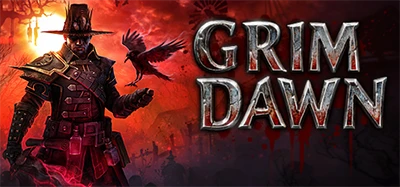
Talent Trees
Interconnected skill trees and constellations defining active abilities and passive bonuses for every Grim Dawn hero.

Talent Trees are a core progression system in Grim Dawn that allow players to customize their character's abilities and passive attributes beyond simple skill allocation. Unlike traditional linear trees, Grim Dawn features interconnected nodes where talents can be accessed from multiple angles, encouraging diverse build strategies. The primary progression systems are the Skill Tree, which governs active combat abilities and their modifiers, and the Devotion System, a constellation-based tree that provides passive bonuses and proc effects. Together, they form the backbone of character identity in the game.
- Game
- Grim Dawn
- Developer
- Crate Entertainment
- Publisher
- Crate Entertainment
- Release Year
- 2016
- System Type
- Active Skill and Devotion Progression
- Unlock Method
- Skill Points from Leveling and Devotion Points from Shrines
Lore & Background
In the world of Cairn, the arcane arts are not merely learned but channeled through deep, personal resonance with specific disciplines. The Skill Bar and Devotion System represent this internal mapping, a manifestation of a hero's potential to bend reality or endure its horrors. Whether one seeks to command the elements as an Occultist or channel the fury of the divine as an Inquisitor, these systems structure the path of mastery. The interconnectivity of the constellations reflects the chaotic nature of the world itself; there is no single 'correct' way to survive the Blight. A warrior might find strength in the same celestial currents that fuel a sorcerer's fire, blurring the lines between classes. This flexibility ensures that every hero carves their own legend through the choices made within these mystical diagrams.
In Their Own Story
The veteran stood before the glowing diagram etched into the stone floor of the abandoned temple. Her fingers traced the path from 'Pyromancy' to 'Inferno,' feeling the heat radiate from the node before her. She hesitated at the junction; one point would grant her greater damage, another would ensure she survived the next ambush. In Grim Dawn, every choice was a gamble against the encroaching darkness, and tonight, survival depended on where she placed this single talent.
Reader's Guide
Talent Trees function by allocating points earned through leveling into specific nodes to unlock or enhance abilities. The Skill Tree focuses on active skills, offering modifiers like increased damage, reduced cooldowns, or added elemental effects. The Passive Tree enhances general attributes such as health, resistances, and resource regeneration. A key mechanic is the 'node requirement,' where certain powerful talents require a specific number of nodes to be unlocked in their vicinity before they become accessible. Synergies are created by combining skills from different trees or linking passive bonuses that amplify active abilities. For example, increasing fire damage passively will boost all fire-based active skills. Players must plan routes carefully, as some builds require 'branching out' to access distant but essential nodes.
Did You Know?
- The Devotion System in Grim Dawn allows for multiple paths to reach the same powerful constellation, offering build flexibility.
- The Devotion System assigns procs to a single skill, triggering on its use rather than linking two active abilities.
- Devotion constellations require affinity points and sometimes prerequisite constellations to unlock their full potential, not attribute thresholds.
- The interconnected nature of the constellations means that no single class is restricted to only one playstyle.
Frequently Asked Questions
What are Talent Trees in Grim Dawn?
Talent Trees serve as the core progression system that lets players customize their character's active combat abilities and passive attributes. Unlike linear systems, these trees feature interconnected nodes that allow for diverse build strategies by accessing talents from multiple angles.
How do Skill Trees differ from Passive Trees?
The Skill Tree governs your active combat abilities and how they are modified during fights, while the Passive Tree focuses on enhancing survivability, resource management, and general character stats. Together, they provide a comprehensive way to define a hero's role beyond simple leveling.
How do players unlock nodes in Talent Trees?
Players earn Talent Points by gaining experience and leveling up their characters throughout the game. These points are then spent to activate specific nodes within either the Skill or Passive Tree to gain new powers or improvements.
Why is the interconnected design of these trees important?
The non-linear, web-like structure encourages creativity by allowing players to approach talent allocation from various directions rather than following a single fixed path. This flexibility ensures that no two builds need to be identical, even if they use the same core skills.
Are Talent Trees unique to Grim Dawn compared to other games?
Yes, while many games feature skill trees, Grim Dawn's specific combination of deeply interconnected nodes and the separation into distinct active and passive systems offers a high degree of build customization. This design allows for complex synergies that define the game's strategic depth since its 2013 release.
More in Mechanics & Systems
Elsewhere in the Grim Dawn universe
Spotted an error? Know more?
This is a living reference — every entry is fact-audited, and reader corrections feed straight into our audit queue. Suggest an edit · See this site's audit record