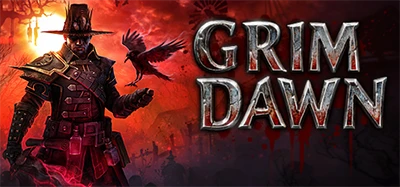
Factions
Choose your disciplines, shape your power, and carve your path through Kainengoth.

The Factions system is the core character-progression and build-customization framework in Grim Dawn. Rather than a single unified skill tree, the game divides its active abilities, passives, and equippable gear into distinct faction disciplines. Players allocate skill points across these factions as they level, choosing which schools of power their character will master. This single decision cascades through every other system: which spells you can cast, which weapons you can wield, and which passives shape your damage profile.
Because points are finite and each faction tree is deep, the system strongly incentivizes committing to one or two disciplines. A character who spreads points across four factions will find every tree underleveled and their gear pool fragmented. The result is a design that rewards deliberate identity: you are a Necromancer who also knows a few Warden blades, or a pure Sorcerer, and that choice is visible in your kit, your loadout, and your playstyle from the first act to the last.
- Type
- Character progression / build-customization system
- Game
- Grim Dawn
- Developer
- Crate Entertainment
- Release year
- 2016
- Core mechanic
- Skill-point allocation across separate faction trees
- Build flexibility
- Single-faction specialization or dual-faction hybrid
- Gear interaction
- Equipment is restricted to factions the player has invested in
Lore & Background
In the world of Kainengoth, the factions represent ancient and distinct traditions of power. Each is a lineage of knowledge passed down through practitioners who devoted their lives to a single discipline. The Necromancer's arts walk the boundary between life and death; the Sorcerer channels raw elemental force; the Warden wields the cold precision of the blade; the Occultist bends the mind and the spirit; the Warlock draws on pacts with things that should not be spoken of. These traditions are not merely academic. They are embodied in the gear a practitioner carries, the rituals they perform, and the very way they move through a battlefield.
A character who trains in multiple factions is not unheard of in Kainengoth's history, though such individuals are often viewed with suspicion. The traditions are jealous of their secrets, and a practitioner who dabbles in another school is seen as diluting their own. Yet in the age of the Darkening, when the world is slowly unraveling and the old orders are failing, pragmatism has begun to outweigh purity. A Hunter who can also cast a Warden's ward, or a Warlock who knows a Shaman's healing rites, is a survival in a world where rigid specialization might mean death.
The factions also shape the social landscape of Kainengoth's settlements. Practitioners gather in their own circles, and the gear they carry—forged or inscribed by their tradition—marks them as belonging to a particular school. This is not merely cosmetic. The materials and enchantments are attuned to the practitioner's discipline, and a blade forged for a Warden will not hold its edge in the hands of a Sorcerer. To wear another faction's gear is to borrow a power you have not earned, and the world does not always forgive that transgression.
In Their Own Story
The tavern in the village of Kainengoth smelled of iron and stale ale. Mara set her Warden's sword on the table, the flat of the blade catching the firelight, and watched the Sorcerer across from her peel a ward off a dead courier's fingers like a man peeling an orange. "You could have just killed it," she said. He smiled, all teeth and ozone. "I could have. I chose to learn what it was wearing."
Reader's Guide
Factions are how you build your character in Grim Dawn. Every time you level up you receive skill points that you must assign to one or more faction trees. Each tree contains active abilities, passives, and utility skills, and the deeper you go, the stronger your kit becomes. You are free to spread points across many factions, but the game is designed so that one or two focused factions produce a far more effective character than four half-developed ones.
Gear is the second half of the system. Weapons, armor, and accessories are tagged to specific factions, and you can only equip items from factions into which you have allocated at least one point. This means your build and your gear are locked together: a pure Sorcerer cannot simply pick up a Warden's greatsword, and a Hunter cannot slot a Necromancer's ring. Plan your faction choices before you start grinding gear, because retooling a character's loadout after dozens of hours is painful.
Two common gotchas trip up new players. First, dual-faction builds require you to split your points, so both trees will be shallower than a single-faction build at the same level. This is a real trade-off, not a free bonus. Second, some passives and actives in a faction tree have prerequisites that require you to invest in seemingly unrelated nodes first. Read the tree top to bottom before you commit, because backtracking points is possible but tedious, and a poorly ordered investment can leave you stuck with a kit that does not match the playstyle you wanted.
Did You Know?
- Gear in Grim Dawn is faction-restricted: you can only equip items from factions into which you have allocated at least one skill point, tying your build and your loadout together from the start.
- The system is designed so that a single-faction specialization is strictly stronger than a dual-faction hybrid at the same total point investment, making the choice between purity and versatility a genuine trade-off.
- Each faction tree contains both active abilities and passives, meaning a character's damage profile, utility, and survivability are all shaped by which factions they invest in rather than by a single universal stat line.
- The faction system is the primary driver of character identity in Grim Dawn: two players at the same level can have completely different kits, gear pools, and playstyles based solely on which factions they chose to devel
More in Mechanics & Systems
Elsewhere in the Grim Dawn universe
Spotted an error? Know more?
This is a living reference — every entry is fact-audited, and reader corrections feed straight into our audit queue. Suggest an edit · See this site's audit record