Crate Entertainment
A one-man studio that outlasted a decade of development to deliver a genre landmark.

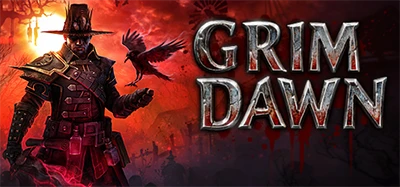
Crate Entertainment is a small independent game development studio based in Canada, best known for creating Grim Dawn, an action role-playing game released in 2016. Operating as a minimal-team operation led by developer Paul Soto, the studio spent many years in development before the game's public launch, producing a deep, content-rich ARPG that carved out a dedicated niche alongside larger-budget titles in the genre.
The studio's legacy is inseparable from the community that formed around Grim Dawn. Players who discovered the game during its long pre-release period became vocal advocates, and the post-launch modding scene, forum culture, and word-of-mouth recommendations helped sustain a title that never had the marketing budget of its corporate peers. Crate Entertainment's identity is that of a scrappy, player-respected indie outfit whose output punches well above its headcount.
- Studio
- Crate Entertainment
- Location
- Canada
- Lead Developer
- Paul Soto
- Signature Title
- Grim Dawn
- Genre
- Action RPG
- Release Year
- 2016
- Platform (primary)
- PC (Steam)
Lore & Background
In the world of Grim Dawn, the land of Khyros is a shattered continent where the old gods have fallen silent and the surviving peoples cling to fragile settlements amid endless hordes of the undead and the corrupted. The game's setting draws on dark fantasy, occult horror, and a sense of civilisational collapse that permeates every region, from the marshlands of the Ashen Vale to the crystalline ruins of the Starfall. Crate Entertainment built this world over years of iterative design, layering in class combinations, skill trees, and a crafting system that rewards deep, methodical engagement over pure speedrunning.
The lore of Khyros is deliberately dense and interwoven. Quests reference ancient pacts, forgotten pantheons, and the slow unraveling of reality at the edges of the map. The game's narrative is delivered through environmental storytelling, NPC dialogue, and a web of interlinked quests that reward players who explore every corner. This depth became a hallmark of Crate Entertainment's design philosophy: the world should feel inhabited and consequential, even in a genre that often treats its setting as mere backdrop.
Beyond the in-game fiction, the studio's own story is one of perseverance. A small team working through an unusually long development cycle, facing the pressures of a genre dominated by AAA publishers, and ultimately earning a reputation built almost entirely on player trust and organic community growth. That narrative of the underdog crafting something genuinely special resonates with the game's own themes of survival against overwhelming odds.
In Their Own Story
The rain hammered the tin roof of the workshop in Ashen Vale, each drop a small percussion against the silence. Maren set down her hammer, wiped the oil from her palms, and listened. Not for the hounds—she'd heard those a hundred times. For the other sound. The low, grinding hum that came from beneath the floor, from the old root-cellar where the first settlers had buried their dead before the Silence took the gods. It had been quiet for three years. Tonight it was not. She pulled the iron key from her belt, the one the old woman at the crossroads had pressed into her hand and called a 'remembering.' The cellar door groaned open, and the dark below breathed out cold air that smelled of starlight and rust. Maren did not light a torch. Some things, the old woman had said, you only see in the dark. She stepped down.
Reader's Guide
Grim Dawn's community story begins long before the 2016 release. For years, Paul Soto and the tiny Crate Entertainment team shared progress through development builds and forum posts, and a small but fiercely loyal group of players followed every patch note, every new class, every region. By the time the game went live on Steam, that audience was already invested, and their word-of-mouth recommendations did what no marketing budget could.
Post-launch, the culture solidified around two pillars: the modding community and the forum. Players built entire new content packs, reworked skill trees, and created alternative difficulty layers. Crate Entertainment engaged with modders directly, and the studio's willingness to support community creativity became a defining part of its identity. The forums became a space where build theory, lore discussion, and bug reports coexisted in a way that felt more like a guild hall than a customer-support queue.
What made this resonate was the sense of reciprocity. A studio this small, answering questions, acknowledging feedback, shipping updates that reflected player requests—this was rare in a genre where players often felt like line items. The community's loyalty in turn sustained the game through years of updates and DLC, creating a feedback loop that no amount of corporate polish could replicate. Grim Dawn became, for many, the ARPG they actually played, and Crate Entertainment the studio they trusted to keep it alive.
Did You Know?
- Crate Entertainment is a very small studio, and Grim Dawn was developed over a period of many years before its 2016 release, a duration unusual even for indie projects.
- The game's class system allows players to combine two of several classes, creating hybrid builds that fundamentally change playstyle, a design choice that became a major point of community discussion.
- Grim Dawn's modding community produced substantial user-generated content, and the studio's support for modders helped sustain the game's long-term popularity.
- The game's setting, Khyros, features a pantheon of gods whose Silence—their withdrawal from the world—is central to the narrative and the game's dark, decaying atmosphere.
More in Community & Legacy
Elsewhere in the Grim Dawn universe
Spotted an error? Know more?
This is a living reference — every entry is fact-audited, and reader corrections feed straight into our audit queue. Suggest an edit · See this site's audit record