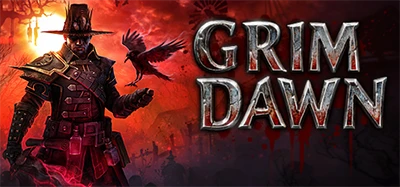
Grim Dawn Modding SDK
A Lua-powered sandbox that turned a single ARPG into a community-built universe.

The Grim Dawn Modding SDK is the collection of tools, documentation, and scripting hooks provided by Crate Entertainment that allow players to create, modify, and distribute user-generated content for the isometric action RPG Grim Dawn. Built around a Lua-based scripting layer, the SDK exposes the game's systems—skills, items, classes, areas, enemies, and UI—so that community creators can build entirely new playable classes, reskin existing content, or overhaul entire regions of the world of Kaitain.
Modding has been a first-class pillar of Grim Dawn's design philosophy since the game's 2016 launch. Rather than being an afterthought, the SDK is maintained alongside the core game, and Crate Entertainment has consistently treated the modding community as a co-developer, publishing official modding guides, hosting a dedicated forums section, and integrating a built-in mod manager directly into the client.
- Developer
- Crate Entertainment
- Genre
- Isometric Action RPG (ARPG)
- Release year
- 2016
- Modding language
- Lua
- Mod distribution
- In-game mod manager / official forums
- Business model
- Free-to-play (base game)
- Lead developer
- Chris Taylor
Lore & Background
In the world of Kaitain, the Shattered Exile's story is never truly finished. The modding SDK embodies that principle: the canon that Crate Entertainment writes is a living document, and the community is invited to extend it. New classes emerge from the collective imagination of players who see a gap in the roster—a magic-user who channels raw elemental force, a melee specialist who wields void-touched blades—and build them from the ground up using the same skill-tree, item, and area systems the studio uses internally.
The SDK's design philosophy is deliberately permissive. Lua scripts hook into the game's entity and ability systems, meaning a mod author can define a new skill with custom projectile behavior, attach it to a new class, populate a new zone with bespoke enemy AI, and wire it all together without touching compiled code. This openness has produced a long tail of community content ranging from small quality-of-life tweaks to full class overhauls that rival official releases in scope.
Crate Entertainment's ongoing support—regular SDK updates that track engine changes, official modding documentation, and a forums culture where developers read and respond to community feedback—has made modding not a peripheral hobby but a core part of how Grim Dawn evolves. The game's free-to-play base model further lowers the barrier: a new player can download the game, install a community class mod, and experience a fundamentally different ARPG within minutes.
In Their Own Story
The workshop smelled of cold coffee and the faint ozone tick of a second monitor. Mara had been awake for nineteen hours, her fingers still warm from the keyboard, staring at the Lua file that defined the new class's passive tree. The skill icon rendered correctly now—finally—glowing a deep arterial red against the dark UI panel. She launched the client, loaded the mod, and watched the character spawn on the training dummies in the starting area. The first swing of the void-touched greatsword connected with a satisfying crunch, particles scattering in the dim lantern light. She leaned back, exhaled, and typed a single line into the forums thread: "v0.4 is up. Break it. I dare you."
Three hours later, the replies were in. Someone had found a stacking exploit. Someone else had made a video of the new ultimate ability clipping through a wall. And a stranger in a timezone she couldn't place had left a comment that simply read: "This is the class I've wanted since I first saw the skill tree layout. Thank you."
Mara closed the laptop. Kaitain was a little bigger tonight.
Reader's Guide
Modding in Grim Dawn has always been treated as a shared craft rather than a hidden feature. From the game's 2016 launch, Crate Entertainment published Lua scripting documentation and a modding forum section where the dev team read threads and answered technical questions. Early community members noticed that the SDK exposed enough of the skill, item, and area pipelines to build a complete new class without reverse-engineering anything, and word spread quickly through the ARPG community.
The culture that formed was collaborative. Mod authors posted work-in-progress builds, invited playtesters, and iterated based on feedback threads that could run to hundreds of replies. Popular class mods—new archetypes with their own skill trees, gear sets, and narrative hooks—became community landmarks, with dedicated fan art and discussion threads that rivaled official content in engagement. Crate Entertainment continued to ship SDK updates in lockstep with engine changes, ensuring that mods remained compatible across patches.
What resonated most was the sense that the game's world belonged to its players. A free-to-play base game, a permissive scripting layer, and a developer team that treated modders as peers created an ecosystem where the boundary between "official Grim Dawn" and "community Grim Dawn" felt intentionally porous. The modding SDK is not an add-on; it is the mechanism by which the game keeps growing long after any single patch cycle ends.
Did You Know?
- Grim Dawn's modding scripts are written in Lua, the same lightweight scripting language used in many game engines, allowing modders to work without a compiled-language toolchain.
- Crate Entertainment's lead developer, Chris Taylor, is the co-creator of the original Diablo series, and he has publicly emphasized that modding support was a design priority from the project's early stages.
- The game's free-to-play base model means a new player can install a community-created class mod and experience a fundamentally different ARPG without purchasing any premium content.
- The SDK exposes the game's skill, item, area, and enemy systems through hooks, meaning a single mod can introduce a new playable class with its own skill tree, gear, and narrative framing.
More in Community & Legacy
Elsewhere in the Grim Dawn universe
Spotted an error? Know more?
This is a living reference — every entry is fact-audited, and reader corrections feed straight into our audit queue. Suggest an edit · See this site's audit record