The Forgotten Gods
The gods the world chose to forget still whisper beneath the soil of Khyros.

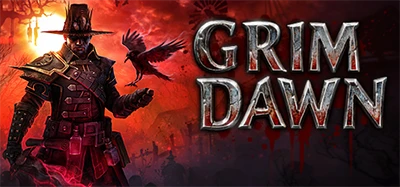
The Forgotten Gods are the ancient, suppressed pantheon at the heart of Grim Dawn's mythology. In the dark-fantasy world of Khyros, these deities were once the objects of widespread worship before being driven into obscurity by the powers that now dominate the land. They represent the buried, forbidden layer of the world's history—the truths that the current order has worked to erase.
Within the game, the Forgotten Gods function as both a lore pillar and a narrative thread. Players encounter their remnants through faction interactions, environmental storytelling, and the occult knowledge accessible to certain character builds. The cult that still venerates them occupies a morally grey space in Khyros, and the community has spent years dissecting what the game's text and item descriptions imply about each god's domain and the nature of their suppression.
- Franchise
- Grim Dawn
- Developer
- Crate Entertainment
- Publisher
- THQ Nordic
- Genre
- Action RPG (ARPG)
- Setting
- Khyros (dark-fantasy world)
- Role in game
- Ancient pantheon / lore faction
- First appears
- 2016 (base game release)
Lore & Background
In the mythology of Khyros, the Forgotten Gods predate the current political and religious order. They are not merely dead or inactive; they are actively suppressed, their names struck from records, their shrines dismantled, their priesthoods scattered. The lore suggests a deliberate campaign of erasure carried out by the institutions that now hold power, implying that the gods' influence was deemed too dangerous or too disruptive to the established hierarchy.
What remains is a patchwork of half-remembered hymns, corrupted iconography, and the whispered teachings of a small cult that refuses to let the old names die. The cultists in Khyros are not simply villains; the game presents them as people clinging to a truth the world has collectively agreed to bury. Their rituals, their iconography, and their scattered strongholds form a counter-narrative to the dominant faiths, and players who follow the threads discover that the Forgotten Gods' domains—death, entropy, hidden knowledge, the spaces between—map onto the very mechanics of the game's darker character builds.
The community has long debated whether the Forgotten Gods are truly divine entities, archetypal forces given a pantheonic wrapper, or something else entirely. The game's writing deliberately withholds a final, clean answer, leaving the question open and inviting players to read between the lines of item descriptions, NPC dialogue, and environmental detail.
In Their Own Story
The shrine was not hidden so much as unmade. Where a temple should have stood, there was only a flat scar in the hillside, the stone ground to gravel, the carvings sanded smooth by generations of deliberate neglect. Maren pressed her thumb into the dust and felt, beneath the grit, the faintest vibration—a pulse, slow as a sleeping heartbeat. She had walked three days through the Ashenmarch to find this place, following a name that no living priest would speak aloud. The cult's elder had given her the word in a voice like tearing cloth, and now, standing in the silence of the erased, she understood why it had cost him so much to say it. The ground hummed. The Forgotten God was not gone. It was waiting, patient as geology, for someone to remember its name and, in remembering, to wake it.
Reader's Guide
When Grim Dawn launched in 2016, the Forgotten Gods were one thread among many in a dense, text-heavy world. Early players on the Crate Entertainment forums and later the THQ Nordic community boards began cross-referencing item descriptions, NPC dialogue, and the Occultist class lore to reconstruct what the game only hinted at. The first fan-made lore compilations appeared within months, piecing together the pantheon's domains from scattered references in gear tooltips and quest text. What made these threads resonate was not just the detective work but the shared feeling that the game was telling a story in negative space—by showing what had been removed, not what remained.
Crate Entertainment's developers, particularly the lead writer, occasionally engaged in these threads, confirming or gently redirecting interpretations without fully confirming, which only deepened the community's investment. The cult faction's ambiguous morality—neither hero nor straightforward villain—gave players a space to debate theology in-world, and those debates bled into discussions about the game's broader themes of institutional power versus suppressed truth. Over the years, the Forgotten Gods became shorthand in the community for the game's most rewarding layer: the lore you have to dig for, the meaning that lives in what the world has chosen to erase.
Did You Know?
- The Forgotten Gods' lore is delivered almost entirely through environmental text, item descriptions, and NPC dialogue rather than a single expository cutscene, making them one of Grim Dawn's most 'hidden' narrative eleme
- The cult associated with the Forgotten Gods occupies a morally ambiguous position in Khyros, and the game's writing deliberately avoids labelling them as purely good or evil, sparking long-running community debates.
- Grim Dawn's developer, Crate Entertainment, is a small indie studio, and the depth of the Forgotten Gods lore—woven across multiple classes, factions, and regions—was built by a team that also handled combat design and s
- The world of Khyros, where the Forgotten Gods are set, is a self-contained dark-fantasy setting with no direct tie to other THQ Nordic properties, giving the lore a standalone mythological weight.
More in Community & Legacy
Elsewhere in the Grim Dawn universe
Spotted an error? Know more?
This is a living reference — every entry is fact-audited, and reader corrections feed straight into our audit queue. Suggest an edit · See this site's audit record