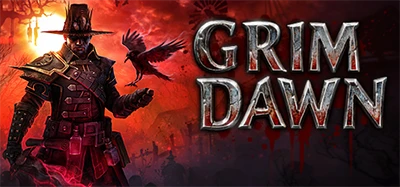
Steam Workshop
Where the community forges the world the developers only sketched.

The Steam Workshop is the modding and content-sharing platform integrated into Grim Dawn, Crate Entertainment's 2016 single-player action RPG. Through this interface, players can browse, install, and share user-created modifications that alter nearly every facet of the game—new skills, classes, items, enemies, and even overhauls of the entire progression system. The Workshop transforms Grim Dawn from a fixed experience into a living, community-shaped sandbox.
Because Grim Dawn is a single-player, classless game with a deep skill-tree and crafting system, it lends itself naturally to modding. The Workshop became the primary venue where the player community experiments, collaborates, and pushes the game's dark-fantasy framework in directions the developers never scripted. It is, in practice, the game's second author.
- Game
- Grim Dawn
- Developer
- Crate Entertainment
- Genre
- Single-player action RPG
- Platform integration
- Steam Workshop (mod browsing, install, sharing)
- Modding scope
- Skills, classes, items, enemies, progression, UI, audio
- Character system
- Classless, skill-point driven
Lore & Background
In the grim, ash-choked world of Grim Dawn, the heroes who wander the ruins of the Last Bastion are never meant to be alone in their suffering. Yet the game is single-player by design, and the only companions a character can carry are the ones they build themselves. The Steam Workshop is where that self-building extends beyond the skill tree. A player in one country can craft an entirely new skill archetype, package it, and push it to the Workshop; a player on another continent can slot it into their own character and walk into a dungeon with abilities the original designers never imagined. The modding community treats the game's systems as a shared language, and the Workshop as the forum where that language is spoken.
Crate Entertainment built Grim Dawn with a modding-friendly architecture from early development, and the Workshop integration meant that once a player installed the game on Steam, the entire community's creations were one click away. Over the years, the Workshop accumulated a vast library of modifications ranging from small quality-of-life tweaks to total overhauls that add new continents, rework the entire skill economy, or introduce entirely new narrative threads. The culture that grew around it is collaborative: modders frequently build on one another's work, and the Workshop's subscribe-and-unsubscribe model means a player can test-drive a mod for an hour and remove it without breaking their save.
What makes the Grim Dawn Workshop distinct from modding scenes in other action RPGs is the depth of the base game's systems. Because there are no fixed classes and every skill is a node in a sprawling, interconnected tree, a mod that adds a single new skill can ripple through dozens of build archetypes. The community has learned to treat each mod as a variable in an enormous equation, and the Workshop is where they solve it together.
In Their Own Story
The tavern in the Last Bastion is quiet tonight. Rain hammers the warped shutters, and the hearth throws long, shivering shadows across the scarred wood of the bar. You sit with your back to the wall, a half-empty flask of something that burns like regret in your hand, and you open the small leather-bound book that is not, strictly speaking, a book. It is the Workshop. Pages of it turn in your mind—names of strangers who built things: a new blade that sings in the dark, a skill that lets you trade a year of your life for one perfect strike, a set of armor that remembers every wound it has taken. You subscribe to three. You unsubscribe from one. The book closes. Outside, the rain stops, and the city smells like iron and wet stone. You stand, check your gear, and walk into the dark. The city does not notice you. It never does. But tonight, the dark is a little different, because you brought something new into it.
Reader's Guide
Grim Dawn launched in 2016 with the Steam Workshop already wired in, and the modding community began assembling almost immediately. Crate Entertainment, a small team, had designed the game's data-driven architecture so that skills, items, and enemies were defined in accessible files, and the Workshop gave players a frictionless way to share the results. Early mods tended to be incremental—a new weapon here, a tweaked skill curve there—but within months the community was producing full skill-tree expansions and alternate progression paths.
What resonated was not just volume but compatibility. Because Grim Dawn's classless system means every player builds their own identity, a mod that adds a new skill archetype doesn't replace anyone's build; it simply adds another axis to an already vast combinatorial space. Modders learned to write for that openness. The Workshop's one-click subscribe model meant a player could test a mod during a single playthrough and remove it before the next, keeping the barrier to experimentation low.
Over the years, the culture settled into a rhythm of collaboration. Modders credit one another in descriptions, build on shared frameworks, and the occasional large-scale project—new zones, overhauled enemy AI, reworked crafting—becomes a community effort. Crate Entertainment continues to update the base game, and the Workshop library evolves alongside it, each patch opening new hooks for the next wave of creators. The game's dark, grinding tone is matched by a community that treats modding as a form of world-building: not just adding content, but deepening a world that already feels lived-in.
Did You Know?
- Because Grim Dawn is a single-player, classless game, a single new skill mod can unlock dozens of previously impossible build combinations without conflicting with any existing player's character.
- The Steam Workshop's subscribe-and-unsubscribe model lets a player test a mod for a single dungeon run and remove it before the next, keeping the risk of breaking a save extremely low.
- Crate Entertainment designed Grim Dawn's data architecture to be modding-friendly from the ground up, meaning the Workshop was not a bolt-on feature but part of the game's original development philosophy.
- The Workshop library spans everything from small UI tweaks and new weapon sprites to total overhauls that add new skill trees, enemy types, and progression systems.
More in Community & Legacy
Elsewhere in the Grim Dawn universe
Spotted an error? Know more?
This is a living reference — every entry is fact-audited, and reader corrections feed straight into our audit queue. Suggest an edit · See this site's audit record