The Ascent
The dead do not rest in Khazan; they rise, and you must answer.

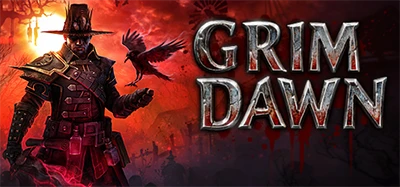
The Ascent is the second major expansion for Grim Dawn, the dark-fantasy action RPG developed by Crate Entertainment. Released in 2017, it followed the earlier Tyrant's Reign pack and deepened the world of Khazan with a new playable class, additional story-driven regions, and fresh enemy encounters. For the community, it represented a continuation of Crate's commitment to iterative, content-rich updates that kept the single-player ARPG feeling alive years after its initial launch.
In terms of legacy, The Ascent is often cited by long-time players as the expansion that cemented Grim Dawn's identity as a living, evolving title rather than a one-and-done release. It reinforced the studio's reputation for delivering substantial, lore-dense content on a schedule that players could genuinely look forward to, and it shaped the design language that carried forward into later packs like The Forgotten Gods and The Descent.
- Type
- Major expansion pack
- Developer
- Crate Entertainment
- Released
- 2017
- Predecessor
- Tyrant's Reign
- Successor
- The Forgotten Gods
- New class
- Spirit of the Shattered
Lore & Background
In the fractured lands of Khazan, the boundary between the living and the dead has never been absolute. The Ascent tells the story of a great spiritual upheaval in which vast numbers of the dead refuse to remain in their graves, coalescing into a collective force that the locals call the Shattered. This is not mere undead animation; the Shattered carry fragments of the intent and memory of those who once lived, twisted into a singular, ascending will that threatens to unmake the natural order of the world.
The expansion's narrative threads weave through newly accessible regions where the veil has grown thin, where the air hums with residual psychic energy and the landscape itself seems to breathe with borrowed life. Players who walk these paths encounter the remnants of civilizations that tried to contain the phenomenon and failed, their ruins now haunted by the very spirits they sought to bind. The lore positions the Ascent as a cosmic event with roots in the deeper mythology of Khazan, connecting it to forces that would later resurface in subsequent expansions.
The Spirit of the Shattered class embodies this theme mechanically and narratively: a character who has touched the boundary of death and returned, carrying with them the power to channel, command, or repel the restless dead. The class design reflects the expansion's central tension—power drawn from a source that is inherently unstable, where every act of dominion over the Shattered risks becoming an act of surrender to them.
In Their Own Story
The wind off the Kruft marshes carried a sound that was almost a word. Kael pressed her palm flat against the moss-slicked stone of the broken archway and felt it thrum back—low, patient, the vibration of something vast turning over in its sleep. Beyond the arch, the fog had a texture, a grain, as though the air itself were made of ground bone.
She had been dead for three days. She knew this because she could still feel the cold settling into her joints in the exact pattern it had on the second night, the way a scar aches before rain. The Shattered did not kill you. They simply… continued you. And continuing was not the same as living.
A hand reached up from the mud at her feet. Not to grab. To show her something. A coin, green with verdigris, pressed into her palm with a gentleness that made her stomach lurch. She recognized it. It was hers. She had dropped it on the road before the fever took her, and she had never thought to look for it.
The hand withdrew. The fog thickened. Somewhere ahead, a voice that was almost hers began to sing a lullaby she hadn't remembered since childhood, and Kael understood, with the cold clarity of the Shattered, that the Ascent had not ended. It had only changed hands.
Reader's Guide
When Crate Entertainment announced The Ascent in 2016, the Grim Dawn community was still digesting Tyrant's Reign and the broader shift from early-access experimentation to a polished, content-rich product. The expansion's development was driven by the same small core team—Paul Reiche III, Fred Warner, and their colleagues in Eugene, Oregon—who had built the base game over years of iterative playtesting. What made The Ascent resonate was not just the new class or the additional map regions, but the sense that the studio was treating the world of Khazan as a living narrative space rather than a checklist of loot tables.
Community threads on the official forums and the Grim Dawn subreddit during the 2017 release window reveal a player base that had grown more invested in lore continuity. Players cross-referenced item descriptions, NPC dialogue, and environmental storytelling to build out the mythology of the Shattered, often filling gaps that Crate left intentionally open. The Spirit of the Shattered class became a particular point of discussion, with players debating build viability and the thematic weight of a class whose identity was literally defined by proximity to death.
The expansion also reinforced Crate's reputation for responsiveness. Patch notes in the months following launch showed the team addressing balance concerns and adding small quality-of-life improvements based on community feedback, a practice that became a hallmark of their post-launch support. For many players, The Ascent was the moment Grim Dawn stopped feeling like a promising early-access project and started feeling like a franchise with a future.
That future would materialize in The Forgotten Gods and later The Descent, but the cultural foundation—the expectation of ongoing, lore-dense content delivered by a small, dedicated team—was set during The Ascent's development and release cycle.
Did You Know?
- The Ascent was the second of what would become a series of major Grim Dawn expansions, establishing a pattern of substantial content drops that continued through The Forgotten Gods and The Descent.
- Crate Entertainment, the studio behind Grim Dawn and its expansions, is known for a small-team development model, with the core design and programming handled by a handful of people rather than a large studio.
- The expansion's spirit-themed class design reflects a broader design philosophy in Grim Dawn where each class is tied to a distinct narrative identity and playstyle rather than being a pure stat variant.
- Grim Dawn's post-launch support model, exemplified by the cadence of expansions like The Ascent, became a point of distinction in the ARPG genre, where many titles see reduced support after initial release.
More in Community & Legacy
Elsewhere in the Grim Dawn universe
Spotted an error? Know more?
This is a living reference — every entry is fact-audited, and reader corrections feed straight into our audit queue. Suggest an edit · See this site's audit record