Necromancer
Death is not the end—it is the Necromancer's arsenal.

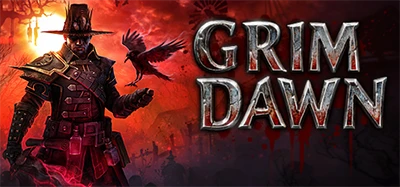
The Necromancer is a playable class in Grim Dawn, the dark-fantasy action RPG developed by Crate Entertainment. Centered on the manipulation of death, undeath, and the boundary between life and the void, the Necromancer commands skeletal minions, hurls bone constructs, and siphons the vitality of the living to fuel its own power. It occupies a flexible role in the party—capable of sustained ranged pressure through summoned armies or a visceral, up-close melee presence that drains enemies dry.
The class is defined by its summoning mechanics and its thematic commitment to the dead. Whether the player chooses to raise legions of bone soldiers or to become a relentless reaper in the thick of battle, the Necromancer's identity is rooted in the idea that death is not an ending but a resource to be harvested and wielded.
- Class
- Necromancer
- Game
- Grim Dawn
- Developer
- Crate Entertainment
- Role
- Summoner / Melee-Ranged Hybrid
- Primary Damage Types
- Physical / Arcane
- Ascendancies
- Bone Lord, Death Knight
- Release Year
- 2016
Lore & Background
In the ash-choked lands of Khyros, where the veil between the living and the void grows thin with every passing season, the Necromancer stands apart from other practitioners of the arcane. Where a Pyromancer commands flame or a Warden calls on the might of the earth, the Necromancer speaks to the dead and, in many cases, the dead listen. The class draws its power from the residual essence trapped in bone, sinew, and the lingering will of the departed, reshaping that essence into tools of war.
The practice is not universally reviled in Khyros, though it is feared. In the borderlands where the Ashen Wastes meet the marshlands of the southern reaches, necromantic rites have been performed for generations—less as an act of malice than as a grim stewardship over the countless unburied dead who litter the battlefield. The Necromancer sees itself, in the best telling, as a keeper of those who cannot rest, giving them purpose one final time before the void reclaims them.
The two paths the class may walk—Bone Lord and Death Knight—reflect a philosophical split within the tradition. The Bone Lord believes the dead should serve as an army, a chorus of the fallen pressed into the will of the living. The Death Knight believes the practitioner should become the instrument of death itself, closing the distance, letting the void pour through their own flesh and blade. Both paths share the same source; they simply disagree on who should do the killing.
In Their Own Story
The marsh fog had not lifted in three days. Kael stood at the edge of the sunken chapel, her fingers tracing the frost that had crept across the altar stones—not from cold, but from the residual chill of the dead who still knelt there, their hollow eyes fixed on a point beyond the shattered stained glass. She did not speak the words. She never had to. The bones beneath the floorboards shifted, cracked, and rose in a slow tide of ivory and marrow, each skeleton turning its empty gaze toward her with something that might have been gratitude. Or hunger. In the marshlands, the two were the same thing. She raised her hand, and the fog parted like a curtain, revealing the black shapes of the Ashen Wastes beyond. The dead followed. They always followed.
Reader's Guide
The Necromancer is the class for players who want to feel like they are commanding a force rather than merely swinging a weapon. At its core, the kit revolves around summoning skeletal minions, launching bone constructs, and draining the life of enemies to sustain yourself. The rhythm of play is distinct: you are never truly alone on the field. Even in the most melee-oriented build, there is a sense of a small, shuffling army at your back, filling gaps and holding aggro while you close the distance.
The two ascendancies reshape this identity sharply. The Bone Lord leans fully into the summoner fantasy—more minions, stronger bone constructs, and a playstyle that rewards positioning and area control. You are the general, not the soldier. The Death Knight, by contrast, strips away the distance and turns the Necromancer into a relentless, life-draining melee bruiser. The dead are no longer your army; they are the fuel in your veins, and you are the blade that cuts the living open.
Build archetypes naturally anchor around these poles: a pure summoner who stacks minion count and bone damage, a melee reaper who chains life drain into sustained duels, and a hybrid that uses a small cadre of skeletons to hold a line while you burst through the front. The class rewards players who enjoy a sense of ownership over the battlefield—every skeleton that rises, every bone spike that erupts from the ground, is a brushstroke in a picture you are painting over the enemy.
Did You Know?
- The Necromancer's summoning mechanics allow players to field multiple skeletal minions simultaneously, creating a small army that acts autonomously in combat.
- Grim Dawn's Necromancer can be taken down either of two distinct ascendancy paths—Bone Lord and Death Knight—each fundamentally altering the class's playstyle from ranged summoner to melee reaper.
- The class blends Physical and Arcane damage types, meaning a Necromancer build can be tuned to exploit different enemy resistances depending on the situation.
- Grim Dawn is a self-published title developed by Crate Entertainment, and the Necromancer was available as one of the original playable classes at launch in 2016.
More in Classes & Ascendancies
Elsewhere in the Grim Dawn universe
Spotted an error? Know more?
This is a living reference — every entry is fact-audited, and reader corrections feed straight into our audit queue. Suggest an edit · See this site's audit record